Hardwired for utility: WCTC fellows focus on tangible AI
"We might have a little better idea of what the landscape will look like in five years — or how long it will take for things that are cutting-edge right now to become standard business practice.” -- Joel Roberts, WCTC fellow
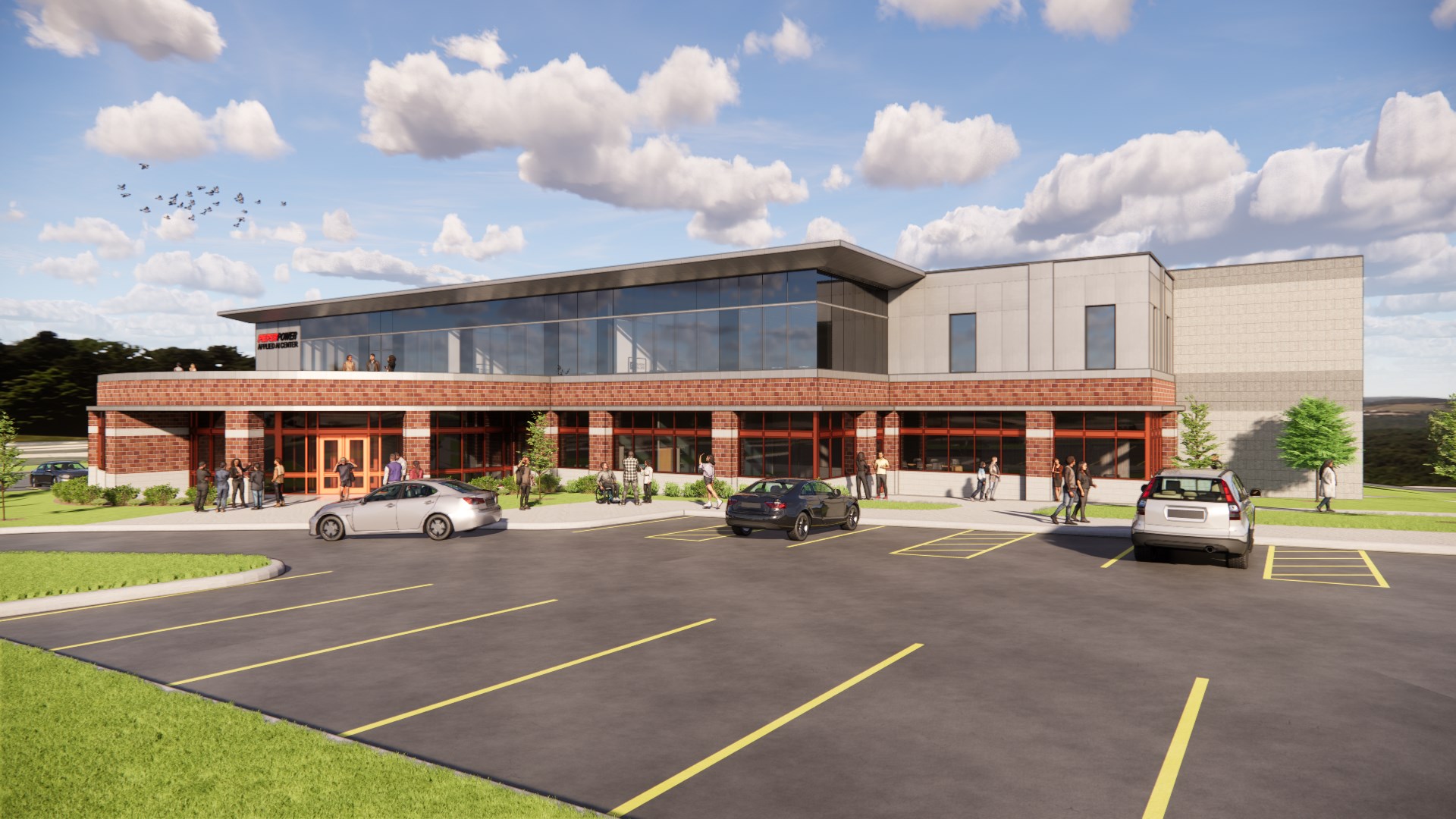
At Waukesha County Technical College‘s Applied AI Lab, innovation is already built into its foundation, and to help that expand, the College welcomed its first two AI fellows at the start of the spring semester.
Joel Roberts, a Ph.D. student in Civil Engineering at the University of Wisconsin-Milwaukee, and Muhammad Alliyu, a bachelor’s and master’s student in Computer Science and Machine Learning, respectively, at the Milwaukee School of Engineering, are driving momentum in the lab.
They bring an added layer of insight as well as technical acumen to WCTC’s AI space. Their specialized expertise benefits WCTC students, the College as a whole and even the regional workforce; in return, they gain valuable practice in hands-on instruction and advanced research.
"Joel and Muhammad are both exceptionally enterprising, curious and talented fellows whose contributions are already making an impact here at the Applied AI Lab. They’re paving the way to demonstrate what’s possible when we infuse rigorous academic approach with tangible, practical problem-solving with AI," said Sarah J. Buszka, Applied AI Lab director. "This is where new methods of attacking wicked problems are born, and we’re at the frontier of it.”
Academic precision plus technical expertise
Roberts brings a background in civil engineering and high-level mathematical skills to this role. He founded Shepherd Traffic, a startup company that uses computer vision to transform standard traffic camera feeds into detailed, real-time analytics for safer, more efficient transportation. While building the startup, he participated in the spring 2025 cohort of the gener8tor gBETA accelerator — his first introduction to the Applied AI Lab.
Now, Roberts can tap into that startup experience and share it with the wider campus community, providing students with concrete examples of how an AI-powered idea moves from concept to application.
He also has a sense of what artificial intelligence tools will become commonplace, which will become obsolete, and which will alter how people work.
"We’re constantly trying to figure out what’s the new thing that we can leverage to go faster, do something better," Roberts said. "We might have a little better idea of what the landscape will look like in five years — or how long it will take for things that are cutting-edge right now to become standard business practice.”
Alliyu brings a multidisciplinary background in business and information technology, with experience in risk management, software engineering and machine learning research. He has a solid interest in quantitative finance and private equity and the role of AI in investment decision-making.
As a fellow, Alliyu hopes those using the lab develop a clearer understanding of AI, shifting the mindset from theory to utility.
"It’s very easy to get fixed into that theoretical bubble," Alliyu said. He explained that the primary challenge lies in moving AI from concepts on a PowerPoint or in a Python script, for example, to something more functional. "How does this help me achieve this goal? How does this give me something physical or something tangible?" he asked, noting it’s a question he wants to help others solve.
Enhancing a robust ecosystem
Alliyu and Roberts’ scope of work is broad. They have been reviewing AI course materials to ensure students are training on the most sophisticated tools available and determining what can be used in classes; they are serving as a tech resource for students in the AI Capstone course; and they are collaborating with a global Fortune 500 company to pilot advanced AI software that integrates large language models (LLMs) and computer vision into WCTC’s computer numerical controls programs.
Beyond these tasks, they support AI training sessions for local businesses. To ensure the lab remains an accessible community resource, they are also developing a comprehensive user guide tailored to the needs of novices and advanced practitioners.
"We need to make sure anyone who walks into the lab is able to at least get something done, regardless of technical proficiency," Alliyu said. "The user guide helps create that ramp up … you're able to get to know the lab, get to know the equipment available and do some really cool stuff — and we can help you figure out how to build that out."
About Waukesha County Technical College
Waukesha County Technical College, the leader in workforce development, prepares learners for success within the region and global economy. The College offers more than 170 areas of study including associate degree, technical diploma, apprenticeship and short-term certificate programs. Customized training for employers is also available. To learn more, visit www.wctc.edu
Media Contact
Shelly Nelson
Public Relations Specialist
mnelson63@wctc.edu
262.695.3484