Child Development Center
The WCTC Child Development Center & Lab (CDC) is licensed by the Department of Child and Families (DCF) and provides quality care and education for children ages six weeks to eight years, who will learn, grow and thrive. Our program is open to WCTC students, WCTC staff and faculty, and the community. At this model laboratory school, we provide intentional learning experiences to best support each child’s individual development.
- Our team of professional teachers hold higher education degrees and field experience averaging ten-plus years.
- Small classroom sizes and high teacher-to-child ratios allow children to experience frequent, individualized learning experiences.
- Our teachers are dedicated to supporting each child’s education and daily care routines.
Please note, the CDC does not offer a drop-in care option.
WCTC Child Development Center
 WCTCCDC@wctc.edu
 262.691.5220
 Building S, 800 Main Street, Pewaukee
Parents as Partners
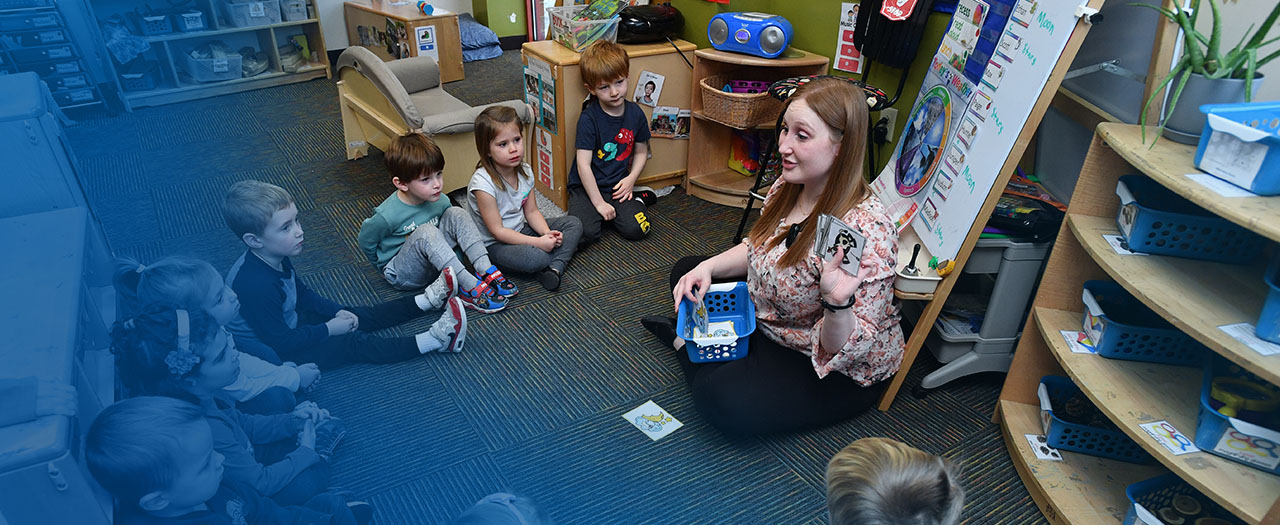
Our teachers begin by getting to know both the child and the child’s family, as strong teacher-family partnerships promote children’s learning.
Learning Lab
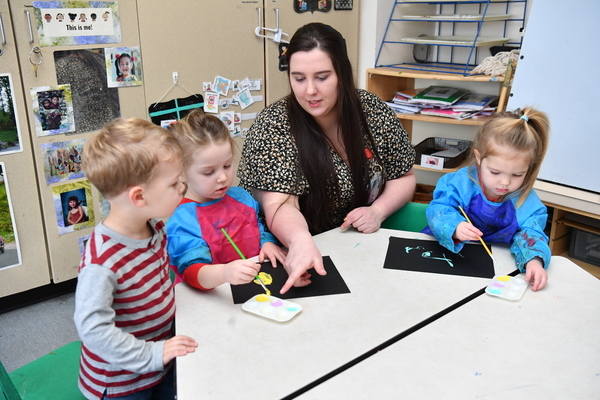
The CDC serves as WCTC’s Early Childhood Education associate degree’s laboratory school. This integration raises the adult-child ratio, brings in fresh ideas and keeps WCTC at the forefront of early childhood education.
Community Collaboration
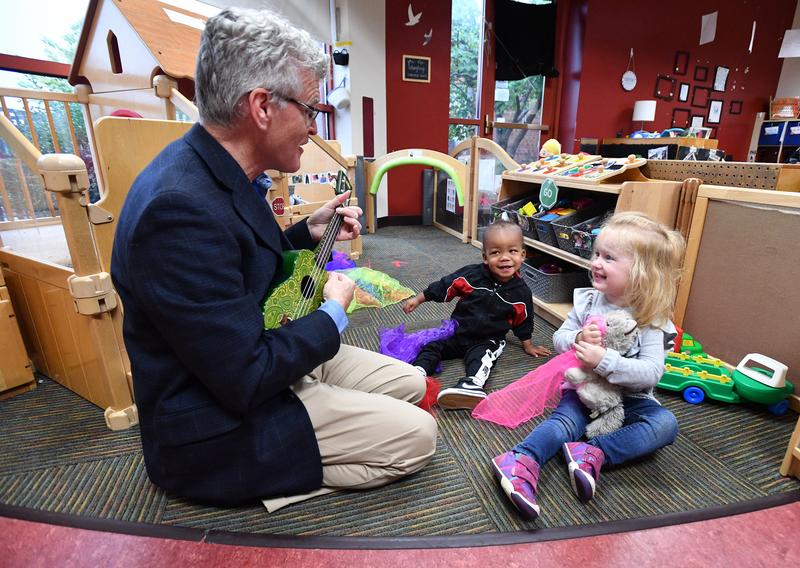
Community collaboration is at the heart of the Child Development Center’s mission. Our teachers hold higher education degrees and field experience averaging ten-plus years.
We strive to develop strong relationships with other community organizations and child/family advocacy groups, because, as the African proverb states, it takes a village to raise a child.
I Want To Learn About...
Classrooms
Children learn best by doing, so our CDC classrooms are built to allow children to be active participants and creative explorers of the world around them. Daily routines blend active, quiet, structured and unstructured activities, allowing for social-emotional, cognitive and physical development. Teachers are able to offer individualized instruction for each child’s development and learning style needs.
The CDC follows The Creative Curriculum, based on 38 objectives for development learning, and is fully aligned with Wisconsin Model Early Learning Standards.
The Infant Classroom
Our infant classrooms consist of two teachers with eight infants from six weeks to 15 months old. Using the ProCare app, parents receive daily communications about their child's day. This program is designed to:
- Nurture a child’s social, emotional, physical, cognitive and language development.
- Provide a safe, healthy and loving environment for children to explore.
- Feature individual care plans for each child, including insight from parents.
- Offer nurturing, one-on-one attention, regular feedings and naps.
The Toddler Classroom
Our toddler classrooms consist of two teachers with eight children from 15 months to 2.5 years old. Using the ProCare app, parents receive daily communications about their child's day. This program is designed to:
- Feature a more routine, time-specific schedule with regular daily activities.
- Focus on refining skills, learning routines through structure and how to communicate feelings.
- Provide opportunities for both independent play and group activities.
- Promote independence at meal time using utensils and cups.
- Offer planned rest time, activities to promote sensory, gross and fine motor development, and opportunities to build language, art and cognitive skills.
The Preschool Classroom
Our preschool classrooms consist of one teacher, one assistant and 12 children from 2.5 to 3.5 years old. Using the ProCare app, parents receive daily communications about their child's day. This program is designed to:
- Nurture children to become independent, self-confident and curious learners who can work well with others and participate in a group.
- Promote purposeful and productive play experiences. Areas include block, library, dramatic play and housekeeping, manipulatives, science, sensory and art.
- Focus on self-help and practical life skills. Children eat family style and serve their own meals, dress and undress themselves for outdoors and work on independent toileting skills.
The Leap Start Classroom
The Leap Start Classroom consists of one teacher with ten children from 3 - 4.5 years old. This classroom is based on a Constructivist theory of teaching and learning: a belief that children learn from meaningful experiences that occur naturally in a social, well-planned environment. The program is designed to:
- Feature activities, discovery centers and projects based on each child’s individual developmental needs and interests.
- Promote small- and large-group play through discovery centers including dramatic play, art, literacy/writing, sensory and mathematics.
- Provide children with a successful “leap start” into school.
The Four-Year Old Program
Our four-year old classroom consists of one lead teacher and one assistant teacher for up to 20 children. This program is designed to:
- Provide children with hands-on opportunities that foster social-emotional and cognitive growth, large and fine motor skills, language, early literacy and numeracy development.
- Support school readiness skills in preparation for 5K.
- Through regular observation and assessment, ensure that each child is meeting their developmental milestones and academic objectives.
Get Kids Ready
WCTC also is participating in Get Your Kid Ready, a state-funded school readiness program that helps 4-year-olds prepare for the transition from child care or home to a school setting. It's free to families, and a child is eligible to participate if they are 4-years-old on or before September 1 of the school year they plan to participate. The program will run Monday-Friday from 8:30-11:30 a.m. The child’s parent or guardian should complete this application - Get Kids Ready - Application - and email it to Lauren Holtz at lholtz6@wctc.edu.
Tuition and Fees
WCTC student parents are awarded a 15% tuition discount with proof of active enrollment. All classroom rates apply until the child has transitioned, regardless of age. Transitions take place at the start of an academic calendar year, with some exceptions. A $50 non-refundable registration fee and $300 security deposit are due at the time of enrollment.
Tuition Rates Effective August 17, 2026:
Infant Program (6 Weeks - 15 Months)
Full-time (30 hours or more)
- $355 per week (WCTC student rate)
- $415 per week (Non-student rate)
Part-time (17-29.5 hours)
- $300 per week (WCTC student rate)
- $353 per week (Non-student rate)
Minimum (16 hours or less)
- $192 per week (WCTC student rate)
- $227 per week (Non-student rate)
Toddler Program (15 Months - 2.5 Years)
Full-time (30 hours or more)
- $314 per week (WCTC student rate)
- $370 per week (Non-student rate)
Part-time (17-29.5 hours)
- $267 per week (WCTC student rate)
- $315 per week (Non-student rate)
Minimum (16.5 hours or less)
- $171 per week (WCTC student rate)
- $202 per week (Non-student rate)
Preschool Program (2.5 - 3.5 Years)
Full-time (30 hours or more)
- $284 per week (WCTC student rate)
- $335 per week (Non-student rate)
Part-time (17-29.5 hours)
- $242 per week (WCTC student rate)
- $285 per week (Non-student rate)
Minimum (16 hours or less)
- $155 per week (WCTC student rate)
- $183 per week (Non-student rate)
Leap Start Program (3 - 4.5 Years)
Full-time (30 hours or more)
- $284 per week (WCTC student rate)
- $335 per week (Non-student rate)
Part-time (17-29.5 hours)
- $242 per week (WCTC student rate)
- $285 per week (Non-student rate)
Minimum (16 hours or less)
- $155 per week (WCTC student rate)
- $183 per week (Non-student rate)
Get Kids Ready/Four-Year Old Program (four years old by September 1)
The Get Kids Ready program covers tuition costs for those in the Four-Year Old program from 8:30-11:30am. Care needed before or after program hours is available at the rates listed under Wrap Care/School Age Extended Care.
Wrap Care/School Age Extended Care
School age kids, ages 5 to 8, are bused to school from the Child Development Center or bused to the Child Development Center after school ends.
Four-Year-Old Program Wrap Care
Wrap-care Hours: 7-8:30 a.m. and 11:30 a.m.-6 p.m.
Full-time wrap (4-5 days)
- $235 per week (WCTC student rate)
- $276 per week (Non-student rate)
Part-time wrap (3 days)
- $200 per week (WCTC student rate)
- $235 per week (Non-student rate)
Minimum wrap (1-2 days)
- $130 per week (WCTC student rate)
- $153 per week (Non-student rate)
School-Age/Summer Care (5-8 years old)
Full-time (30 hours or more)
- $276 (WCTC student rate)
- $325 (Non-student rate)
Part-time (17-29.5 hours)
- $234 (WCTC student rate)
- $276 (Non-student rate)
Minimum (16.5 hours or less)
- $153 (WCTC student rate)
- $180 (Non-student rate)
Reduced rates available for school-age children requiring less than 10 hours per week.
Learn More/Next Steps
You can enroll your child at the WCTC Child Development Center on a part- or full-time basis. The CDC does not offer a drop-in care option. Registration takes place at the start of fall, spring and summer semesters on a first-come, first-served basis. We encourage you to contact us early in the semester, as a waitlist is typically maintained.
- Weekly fees include all meals and snacks.
- WCTC student parents can take advantage of flexible scheduling and priority enrollment.
Please complete the form below to be contacted by our staff:
Please Select your Status:
What would you like to do?
How did you hear about us?
NAEYC Accredited Program
This NAEYC-accredited program aligns curriculum to Wisconsin Model Early Learning Standards (WMELS) with a daily focus on children’s social-emotional, physical, language and cognitive development.